Tattoo Butterfly: A Sketch-Style Dingbats Font for Expressive Creativity
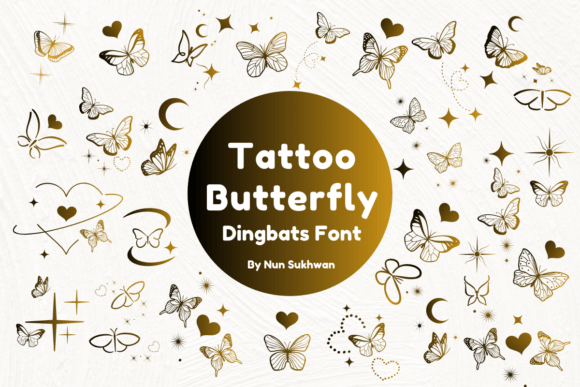
Imagine a font that doesn’t just spell words—but sketches moods, evokes hand-drawn charm, and adds a whisper of whimsy to every project. Tattoo Butterfly is exactly that: a distinctive dingbats font designed with an authentic sketch-style aesthetic. Unlike traditional typefaces built for readability alone, Tattoo Butterfly delivers expressive visual symbols—butterflies, florals, swirls, arrows, hearts, and delicate linework—all drawn with the loose, confident energy of ink on paper.
What Makes Tattoo Butterfly Unique?
At its core, Tattoo Butterfly is a dingbats font, meaning it replaces standard alphanumeric characters with decorative glyphs. But what sets it apart isn’t just its content—it’s its execution. Every glyph is crafted to look like it was sketched by hand: slightly uneven lines, subtle tapering strokes, organic curves, and intentional imperfections that convey warmth and personality.
This isn’t a vector-perfect, digitally sterile set of icons. It’s intentionally human—ideal for creators who value authenticity over uniformity. Whether you’re layering a butterfly motif into a watercolor wedding invitation or using a hand-drawn arrow to guide guests through a DIY event timeline, Tattoo Butterfly brings tactile nuance to digital design.
Key Characteristics You’ll Notice Right Away
- Sketch-style linework: Lines vary in weight and flow naturally, mimicking pen or fine-tip marker movement.
- Dingbats-only structure: No letters or numbers—just a curated library of thematic, cohesive symbols.
- Light, airy, and feminine-leaning—but versatile: While butterflies and florals dominate, many glyphs carry neutral elegance suitable for gender-inclusive or minimalist projects.
- High-resolution scalability: As a vector-based OpenType font, Tattoo Butterfly stays crisp at any size—from tiny embellishments on gift tags to large-scale wall decals.
Where Does Tattoo Butterfly Shine? Real-World Uses
Because it’s a visual language rather than a textual one, Tattoo Butterfly excels where mood, theme, and handmade appeal matter most. Here’s how different users bring it to life:
For Wedding Planners & Couples Planning DIY Invitations
Wedding stationery benefits immensely from personal, tactile details. With Tattoo Butterfly, you can insert custom flourishes between names on save-the-dates, frame RSVP cards with delicate wings and vines, or use dotted-line butterflies as section dividers in programs. Its sketch quality pairs beautifully with letterpress textures, kraft paper, or soft pastel palettes—no extra illustration work needed.
For Crafters & Home Decor Enthusiasts
Whether you're designing printable wall art, stenciling fabric banners, or labeling jars for a farmers’ market booth, Tattoo Butterfly offers instant visual cohesion. Try typing “B” to get a bold winged motif, or “*” for a cluster of tiny blossoms—then resize, recolor, or layer it over photos or watercolor backgrounds. Many crafters report using it directly in Cricut Design Space or Silhouette Studio to cut vinyl decals without converting files manually.
For Small Business Owners Building Brand Identity
Logos don’t always need words—and sometimes, a single symbolic mark says more. Tattoo Butterfly provides ready-made, stylistically unified elements perfect for crafting custom monograms, social media avatars, or packaging accents. A boutique apothecary might combine a butterfly glyph with a serif wordmark; a yoga studio could use flowing swirls as divider lines across business cards. Since all glyphs share the same sketch DNA, your brand feels intentionally cohesive—even when minimal.
For Educators & Content Creators Making Printables
Teachers, bloggers, and online course designers often seek low-effort ways to elevate PDFs, worksheets, or planners. Tattoo Butterfly lets you add gentle visual cues—a butterfly beside “Goals”, a vine wrapping around “Notes”, or a heart dotting an “i”. These small touches improve scannability and emotional resonance without overwhelming learners or cluttering layouts.
Who Should Consider Tattoo Butterfly—and Who Might Look Elsewhere?
Tattoo Butterfly is ideal for anyone who values expressiveness, speed, and stylistic consistency in visual communication. It’s especially helpful if you:
- Want to add hand-crafted charm without hiring an illustrator.
- Work frequently with themed projects (e.g., weddings, baby showers, botanical branding).
- Prefer working in familiar tools like Canva, Adobe Illustrator, or Google Docs (yes—it works there too, once installed!).
- Need scalable, print-ready assets fast—no licensing headaches or attribution requirements.
That said, keep these practical considerations in mind:
- It’s not a text font. You won’t use Tattoo Butterfly to write paragraphs or headlines. It complements—not replaces—your primary typeface.
- Style alignment matters. Its sketch aesthetic may feel out of place in ultra-modern tech branding or corporate reports. Ask yourself: does “hand-drawn” support my message—or distract from it?
- Customization is simple—but limited. You can change color, size, spacing, and layer it creatively—but you can’t alter individual stroke paths unless you convert to outlines (which some design apps allow).
Getting Started: How to Use Tattoo Butterfly Effectively
You don’t need advanced design skills to make the most of Tattoo Butterfly. Here are three beginner-friendly tips:
1. Pair Thoughtfully
Match it with clean, legible fonts—like a light sans-serif for modern contrast or a vintage script for romantic harmony. Avoid pairing it with other highly textured or busy dingbats fonts; let Tattoo Butterfly be the star accent.
2. Use Consistent Sizing & Spacing
Because glyphs vary in visual weight, test how they sit next to each other. A large butterfly beside a tiny flower may throw off balance. Try setting a base size (e.g., 24pt), then scale others proportionally—or use alignment guides in your design tool to maintain rhythm.
3. Leverage Layering
One of Tattoo Butterfly’s quiet superpowers is how well its glyphs stack. Place a butterfly behind semi-transparent text, overlay a swirl beneath a quote, or scatter small motifs along a border. In tools like Photoshop or Figma, adjust opacity or blending modes to soften impact—or go bold with solid fills for high-contrast posters.
Final Thoughts: More Than Just a Font
Tattoo Butterfly is less about typography and more about tone. It’s the visual equivalent of saying, “This matters—and I made it with care.” Whether you’re sealing envelopes with a custom wax stamp inspired by its motifs, building a logo system rooted in organic line art, or simply adding joy to a child’s birthday banner, this font invites intentionality into everyday making.
Its strength lies not in complexity—but in clarity of purpose. If your goal is to communicate warmth, creativity, and attention to detail—without overcomplicating your workflow—Tattoo Butterfly isn’t just a tool. It’s a quiet collaborator in every project you touch.